All apps / Series
How Things Work
The mechanisms inside ordinary objects, slowed down far enough to see. Most of them are cleverer than they need to be.
A lock, a sewing machine, a clock, the gearbox under a car: things handled daily by people who have never seen inside them. The mechanisms are usually small, usually old, and very often surprising — the way a lockstitch actually forms is not what anyone guesses. Each of these takes one everyday object apart and lets you work the mechanism yourself, slowly, until the trick of it is obvious.
In this series
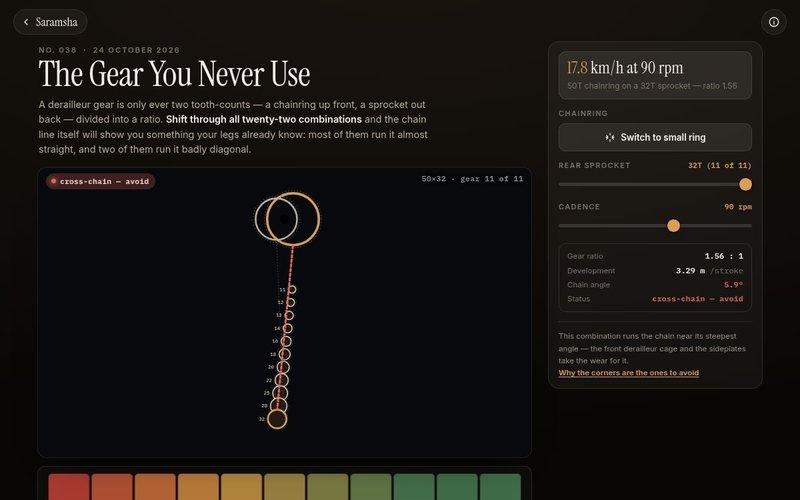
The Gear You Never Use
Shift a bicycle's two chainrings against its eleven-sprocket cassette and watch the chain line itself reveal the two combinations that cross it badly.
Open
The Slider Holds Nothing Shut
A zip's slider doesn't grip the fabric — a wedge inside it cams two rows of identical hooks into alignment, and the hooks' own shape does the locking. Bend one hook and watch the slider jam on it.
Open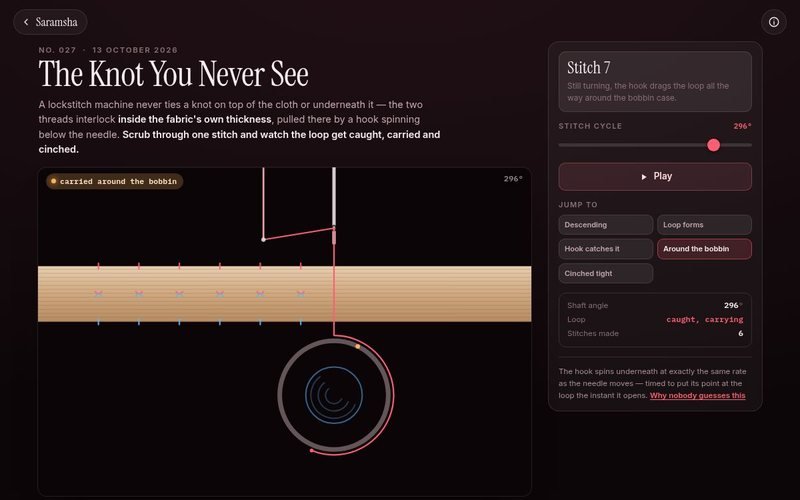
The Knot You Never See
A sewing machine's lockstitch locks two threads together inside the fabric, not on either surface — a rotating hook lassos the needle thread's loop all the way around the bobbin before the take-up lever snaps it tight. Scrub through one stitch, frame by frame, to see the catch happen.
Open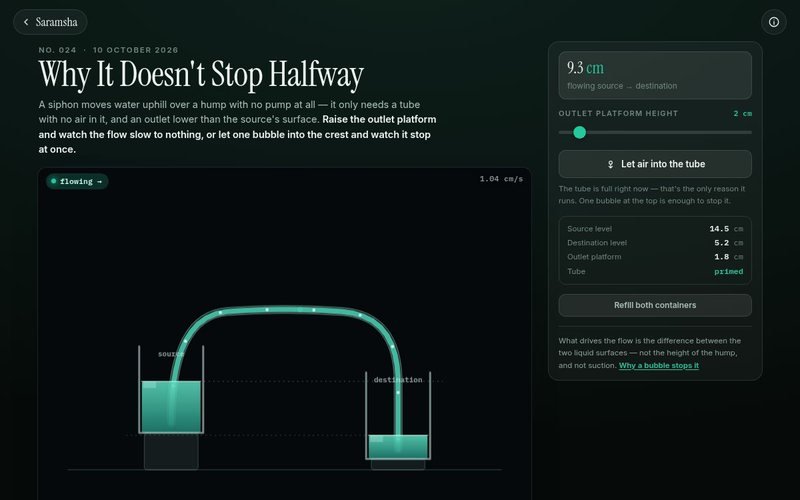
Why It Doesn't Stop Halfway
A siphon runs on nothing but a height difference and a tube with no air in it — not suction. Raise the outlet to slow it, or let one bubble into the crest to stop it outright.
Open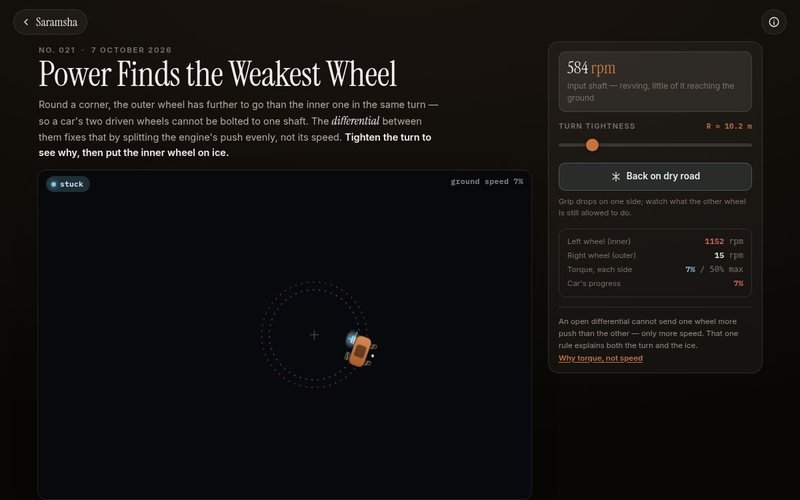
Power Finds the Weakest Wheel
A car's differential splits engine torque evenly between its two wheels, which is exactly why they can spin at different speeds round a corner — and exactly why one wheel on ice can strand the other, no matter how much grip it has.
Open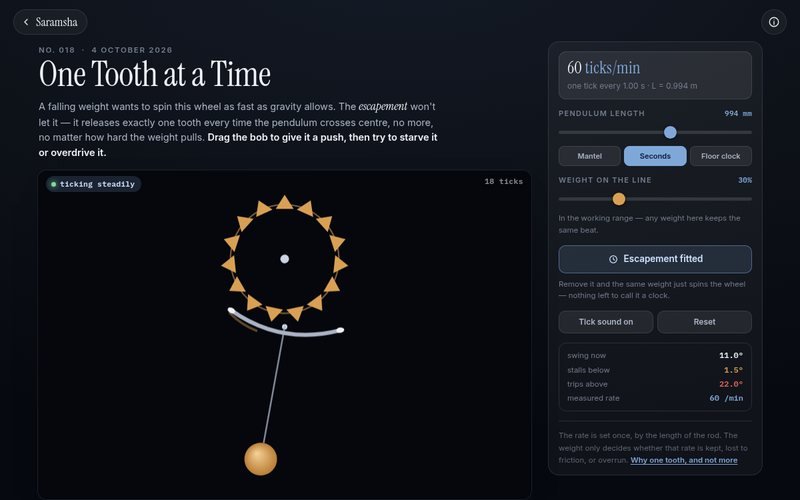
One Tooth at a Time
A falling weight wants to spin a gear as fast as gravity allows. The escapement lets through exactly one tooth per half-swing of a pendulum — starve it or overdrive it and watch why neither works.
Open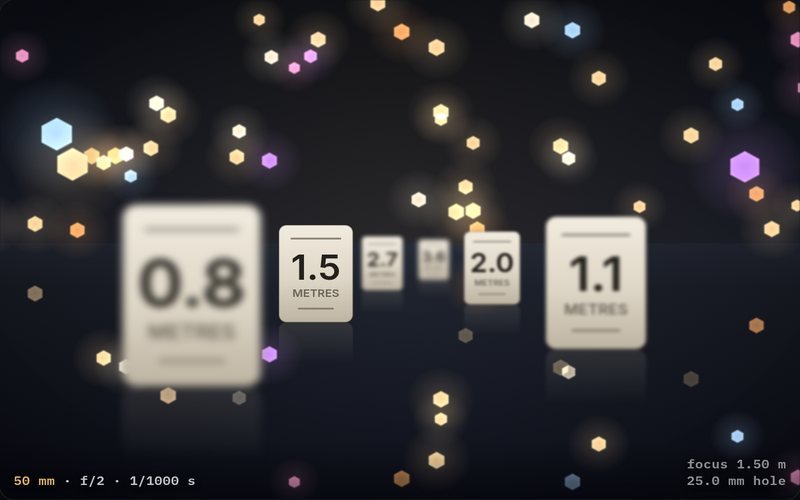
Only One Plane Is Sharp
A lens brings exactly one distance to a point; everything nearer or farther lands on the sensor as a disc, and the width of that disc is the blur. Open the aperture and watch the sharp slice close to seven centimetres, while the far lamps swell into hexagons the shape of the hole.
Open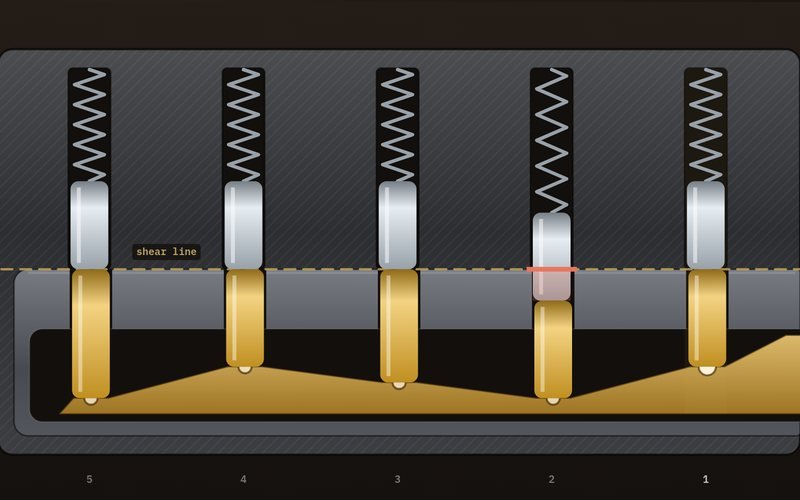
Five Pins and a Line
The lock on your front door is five stacks of two pins, and the only thing a key does is lift every join to one line. Cut a key until it turns, or pick the lock the way it is really done — one binding pin at a time, by feel.
Open