All apps / Series
Maths and Pattern
Proofs, curves, graphs and the patterns that fall out of simple rules repeated without mercy.
Mathematics is the one subject where you can be told the answer and still not believe it. Four colours really are always enough. Every closed curve really is a sum of circles. A flock of two thousand birds really does organise itself with no leader and no plan. None of that is obvious, and an argument on paper rarely makes it feel true — so these let you push the thing until it stops being surprising.
In this series

The Kaleidoscope Without Glass
A kaleidoscope's pattern comes from a strict rule, not magic glass: rotate and reflect around a centre. Draw one stroke and watch it multiply into a mandala, then slide the fold count and watch the same strokes become a different flower.
Open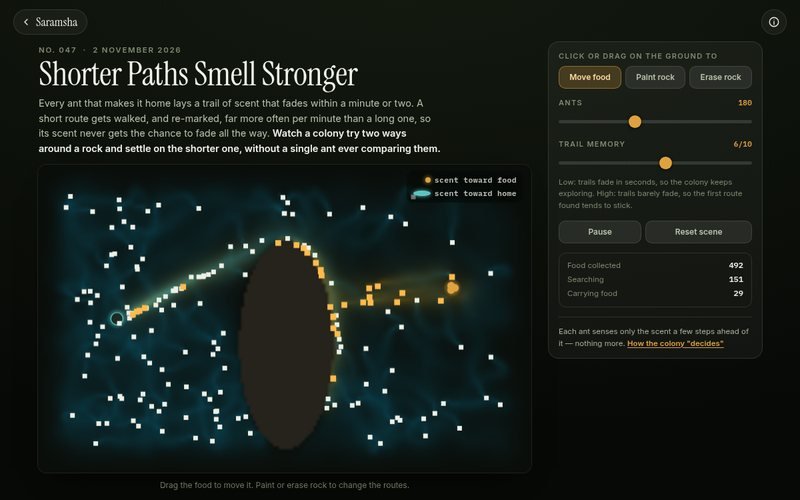
Shorter Paths Smell Stronger
Ants lay a fading trail of scent on every walk home. A short path gets walked more often per minute, so its scent never finishes fading — and the whole colony ends up on it without a single ant choosing on purpose.
Open
Closest Seed Wins
Every pixel joins whichever seed point is nearest to it. Scatter the seeds, drag one, or relax them toward evenness, and watch a photo turn into stained glass.
Open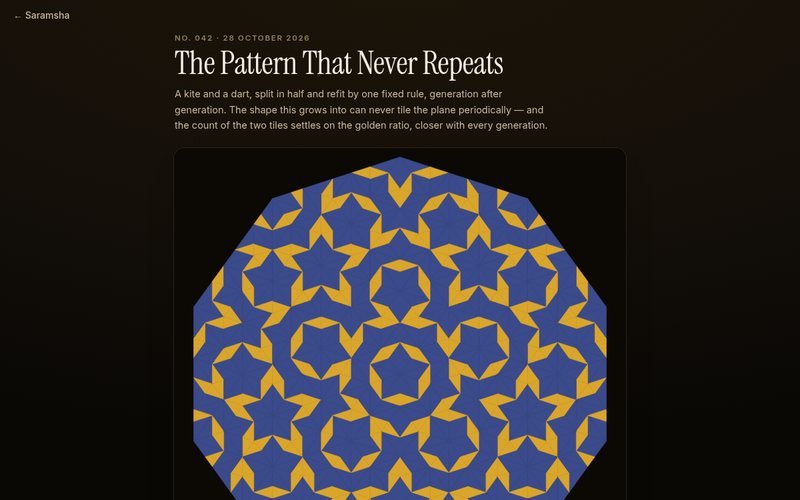
The Pattern That Never Repeats
A kite and a dart, split in half and refit by one fixed rule, grow a tiling that can never repeat — and whose two shapes arrive in the golden ratio, closer with every generation.
Open
Every Peg Is a Coin Flip
A ball falling through rows of pegs turns left or right by pure chance at each one. Drop a thousand and watch the bell curve fall out of the bouncing.
Open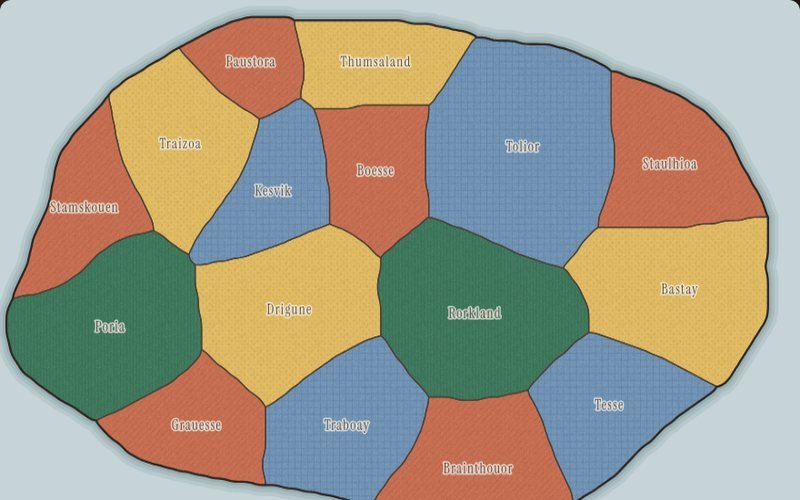
Never a Fifth Colour
Four colours are enough to paint any map so that no two countries sharing a border match. Colour an invented one yourself, try it with three and watch that fail, or set the search going and see it place, clash and backtrack its way to an answer.
Open
Knots at the Doorstep
A sikku kolam is one line of rice flour looping around a grid of dots, with no loose ends. Twist any crossing and two lines fuse or one splits — the traditional goal is to get the whole pattern down to a single closed loop.
Open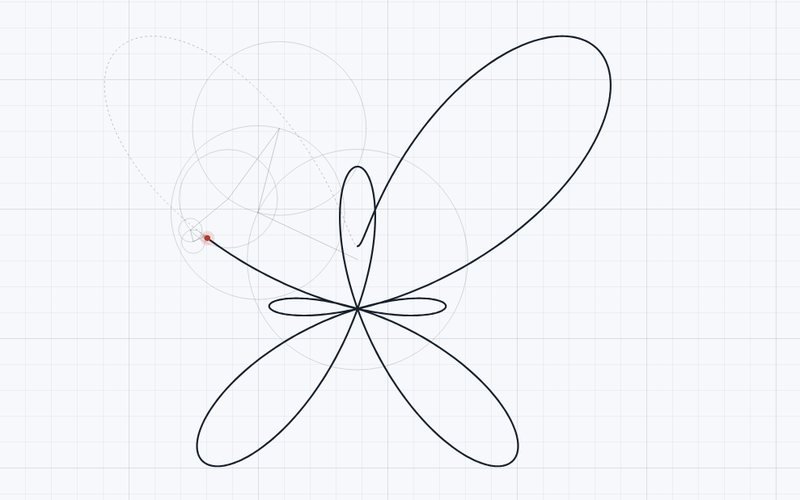
Drawn by Circles
Every closed line is a sum of circles turning on circles. Draw one and watch a chain of them redraw it — then take circles away and see how few it really needs.
Open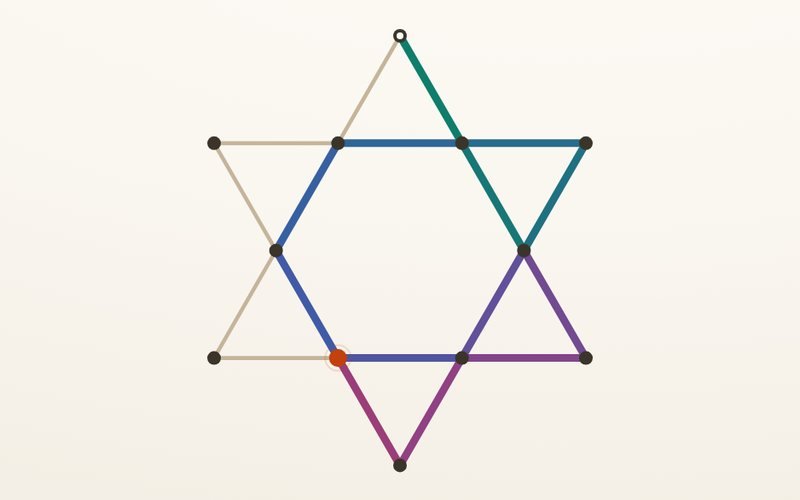
Without Lifting the Pen
Trace every line of a figure in one unbroken stroke, no line twice. Euler settled which figures can be done in 1736, and the ringed corners give the rule away.
Open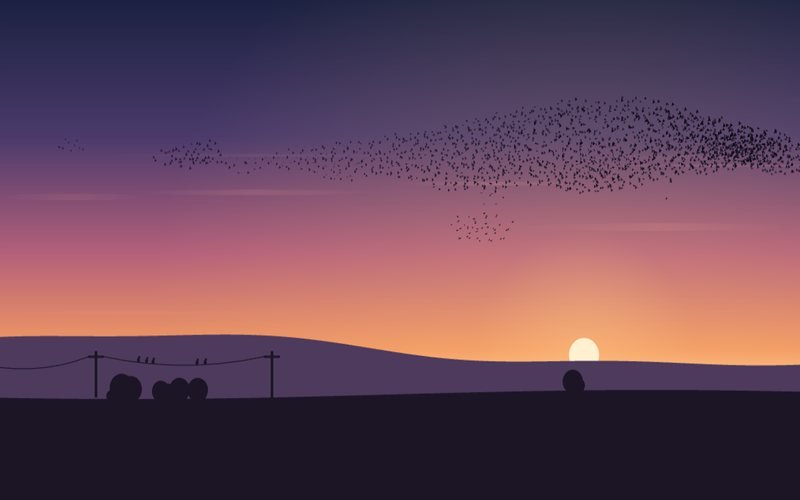
Murmuration
Two thousand starlings, each watching only its seven nearest neighbours. Fly through them as a falcon and watch the panic ripple.
Open